
Planting
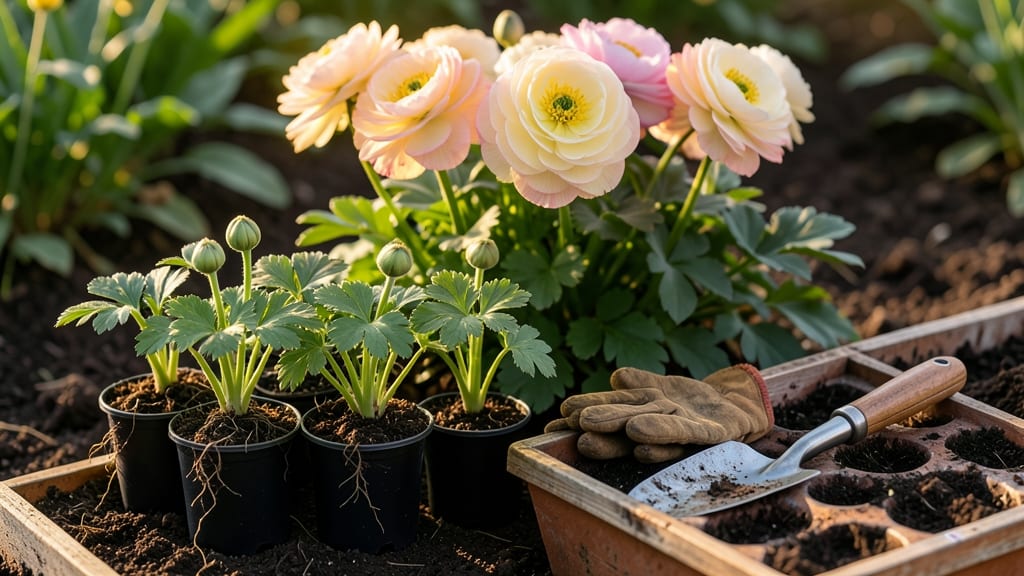
Planting ranunculus flowers at the right time ensures those bold, layered blooms you love will thrive, not just survive.
Picture this: you’ve waited months for those 🌸 peony-like blooms to pop—only to find your corms rotting in soggy soil because you planted too early. Or worse, they sprout too late and bolt straight into summer heat, leaving you with stunted stems and no flowers.
Timing isn’t just a suggestion; it’s the difference between a showstopper garden and a sad, half-hearted attempt.
For most gardeners in USDA Zone 6a (and beyond), the sweet spot is late winter to early spring—about 8 to 12 weeks before your last frost. But here’s the catch: cooler climates (Zones 3-5) might need an earlier start, while warmer zones (7-11) can push planting into early fall.
Soil temperature and frost dates play a bigger role than you’d think, and getting it wrong can mean wasted corms or delayed blooms.
In this guide, I’ll break down the exact planting windows for your zone, share soil prep secrets to avoid rot, and reveal how to stretch your ranunculus season for longer, more reliable blooms. No more guesswork—just lush, vibrant flowers that arrive right on schedule.
Best planting times for ranunculus by USDA hardiness zones
Ranunculus corms thrive when planted at the right time, but their ideal window varies dramatically across USDA hardiness zones 3-11. Unlike hardy bulbs like tulips, ranunculus need precise timing to establish roots before spring blooming.
In cooler zones (3-5), I plant mine 8-12 weeks before last frost—typically late winter to early spring—while warmer zones (9-11) can handle early fall planting for winter dormancy.
Soil temperature is critical: ranunculus corms need 40-50°F soil to sprout. In zones 6-8, this usually aligns with March-April planting, but a soil thermometer helps avoid premature planting.
Overly warm soil triggers early growth that freezes back, wasting your corms. I always check soil temps for 3-5 consecutive days before planting to ensure consistency.
Here's a quick zone-by-zone breakdown to simplify your planning:
| Zone | Primary Planting Window | Soil Temp Requirement | Frost Consideration | Pro Tip |
|---|---|---|---|---|
| 3-5 | Late Winter (Feb-Mar) | 40-45°F | Plant 8-12 weeks before last frost | Use row covers for early protection |
| 6-8 | Early Spring (Mar-Apr) | 45-50°F | Avoid planting when night temps dip below 35°F | Pre-chill corms for 4-6 weeks |
| 9-11 | Early Fall (Sep-Oct) | 50-55°F | Plant 6-8 weeks before first frost | Mulch heavily for winter protection |
For zones 6-8, I've found that staggered planting extends bloom time. Plant 1/3 of corms in early March, another third in mid-March, and the final third in early April.
This creates a 6-8 week blooming sequence instead of one concentrated flush. The key is maintaining consistent soil moisture—never let corms dry out during root establishment.
In warmer climates (zones 9-11), fall planting mimics their natural Mediterranean cycle. Plant in September when soil temps drop to 50-55°F. This gives corms time to root before winter dormancy.
I always add a 2-3 inch layer of mulch after planting to insulate against temperature swings that can cause corm rot.
One common mistake I see is planting ranunculus too early in spring. When soil is still cold (<40°F), corms remain dormant and may rot. Always wait until you can push a finger 3 inches deep into the soil and feel it's warmed up. In my zone 7 garden, this usually means waiting until mid-March even if the air feels spring-like.
If you're in a transition zone (like zone 7b/8a), consider both spring and fall planting. I've had success with fall-planted corms that bloom earlier in spring, followed by spring-planted batches for a second flush. Just be prepared for some corms to fail in unpredictable winters—always plant extras!
For container gardening, timing shifts slightly. Ranunculus in pots need 2-3 weeks earlier planting than in-ground because containers warm faster. I plant mine in late February in zone 7, moving containers to a sheltered spot until soil warms. This head start gives them a competitive edge over in-ground plantings.
Remember: ranunculus corms are not frost-tolerant once shoots emerge. If an unexpected late frost threatens, cover plants with frost cloth or a lightweight row cover.
I've saved multiple plantings this way—especially in zone 6 where late frosts are common. The goal is to let roots establish before exposing shoots to cold.
🌸
How to time ranunculus planting for longer blooming seasons
Timing your ranunculus planting correctly is the secret to unlocking those layered, poppy-like blooms that last for weeks. Unlike many bulbs, ranunculus thrive with staggered planting, which means spreading out your corms over 3-4 weeks for a continuous display.
This simple trick can extend your bloom time from 2-3 weeks to a full 6-8 weeks of color.
Your USDA hardiness zone plays a critical role—cooler climates (Zones 3-6) benefit from early fall planting, while warmer zones (7-11) should focus on late winter to early spring.
The key is planting when soil temps hover around 40-50°F, giving roots time to establish before the growing season kicks in.
⚠️ callout warning ⚠️
Ranunculus corms rot if planted in cold, wet soil. Many gardeners make the error of planting in early fall (Zones 7-11) or late winter (Zones 3-6) without checking soil temps. Wait until ground thaws but frost is still possible—this ensures roots establish before rapid growth begins.
Fix: Use a soil thermometer. Plant when temps are consistently above 40°F at 4" depth. In Zones 3-6, aim for 6-8 weeks before last frost; in Zones 7-11, plant 8-12 weeks before first frost.
For longer blooming seasons, combine staggered planting with microclimate adjustments. In cooler regions, plant 1/3 of corms in early fall (for early spring blooms) and the rest in late winter (for late spring blooms).
Warmer zones should focus on two planting sessions: one in January-February (for early spring) and another in March-April (for late spring).
Soil preparation is just as critical as timing. Ranunculus hate soggy soil, so amend your beds with sandy loam or perlite to improve drainage. A well-draining mix prevents corm rot, the #1 killer of these delicate perennials.
Work in compost or aged manure to provide nutrients without compacting the soil—ranunculus roots need air and space to thrive.
Don’t overlook sun exposure when planning your planting schedule. Ranunculus need 6+ hours of full sun daily, but in hotter climates (Zones 8-11), afternoon shade can prevent heat stress.
If your garden is low-light, opt for partial shade and plant in early spring to avoid summer wilting. In cooler zones (3-6), prioritize south-facing beds for maximum sun exposure.
Finally, avoid the temptation to fertilize heavily right after planting. Ranunculus are light feeders—too much nitrogen early on leads to leafy growth at the expense of blooms.
Instead, wait until shoots emerge (4-6 weeks post-planting) and apply a balanced 5-10-10 fertilizer sparingly. This ensures your plants focus on root establishment first, then bloom production.