
Watering
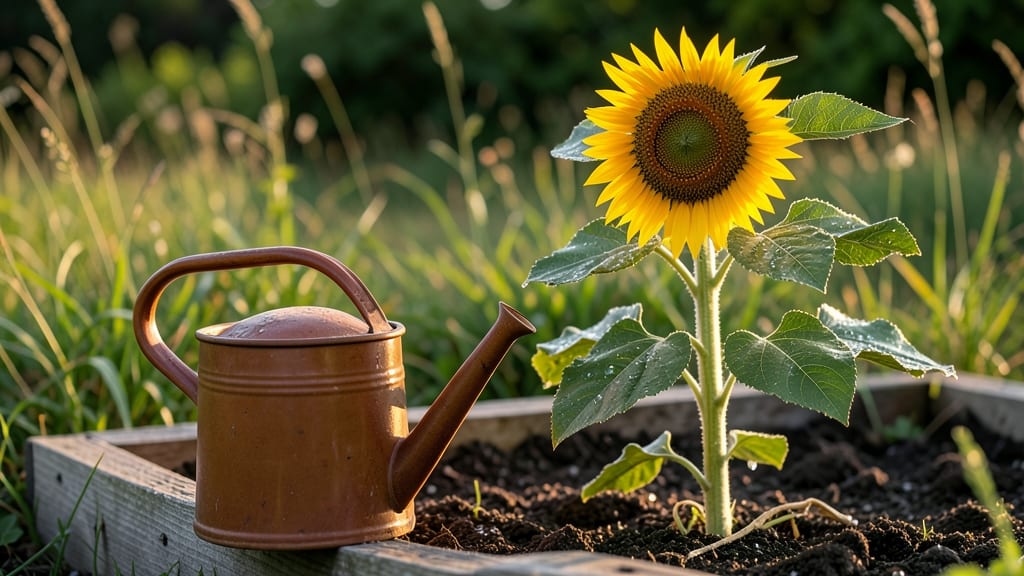
Sunflowers need consistent watering to grow tall and strong 🌻 — about 1-2 inches per week during their active growing season, with adjustments for heat and soil type.
Picture this: you’ve poured hours into planting your sunflowers, only for them to wilt before reaching their full towering potential. The culprit? Watering mistakes. Too much or too little can stunt growth, leaving you with sad, droopy stems instead of the vibrant giants you envisioned.
Here’s the good news: with the right watering schedule, you can transform weak seedlings into sturdy, sun-soaked stalks. I’ll break down exactly how much water sunflowers need at each stage, from germination to full bloom, plus how to spot signs of over- or under-watering before it’s too late.
Whether you’re a beginner or a seasoned gardener, these practical tips will help you keep your sunflowers thriving all season long. Let’s get those roots drinking just right!


Sunflower watering schedule by growth stage: seedling to full bloom
Sunflowers are thirsty giants that need precision watering to grow from delicate seedlings into towering 10-foot stalks. Their water needs change dramatically at each stage—too much too soon causes rot, while neglect stunts growth.
I’ve grown sunflowers in arid deserts and humid climates, and the key is matching water to their current growth phase.
Newly sprouted sunflower seedlings (first 2 weeks) need consistent moisture to prevent drying out, but established plants can handle drought-like conditions once their roots deepen.
The secret? Deep, infrequent watering that encourages strong root systems. Let’s break down the exact schedule for each stage, plus how to adjust for your climate zone.
During the germination stage (0-14 days), sunflower seeds need constant moisture—think of them like a sponge. Water lightly every 1-2 days to keep the top ½ inch of soil damp.
In humid climates, reduce to every 2 days to avoid fungal diseases, while arid zones may need misting twice daily. Overwatering now causes seed rot, so use a spray bottle for precision.
Once seedlings emerge and reach the vegetative stage (2-6 weeks), shift to deep watering every 3-4 days. Push water 1-2 inches deep to encourage roots to grow downward. In temperate zones, stick to this schedule, but in humid areas, extend to every 4-5 days.
Look for yellowing lower leaves—this is your cue to water more frequently. Wilting in the afternoon means you’re underwatering.
The flowering stage (6-10 weeks) is when sunflowers demand less frequent but deeper watering. Reduce to every 5-7 days, ensuring 1-1.5 inches of moisture per session. Arid climates may need daily checks, while hot afternoons increase evaporation—water early morning to prevent stress.
Watch for drooping buds or brown leaf edges, which signal thirst or overwatering.
Finally, during seed production (10+ weeks), sunflowers become drought-tolerant. Cut back to every 7-10 days, allowing the top 1 inch of soil to dry. This stage is critical for seed development—too much water causes premature seed drop. In all climates, reduce water
How much water do sunflowers really need? Soil depth, frequency, and seasonal adjustments
Sunflowers thrive on consistent moisture but despise soggy roots—finding the perfect balance is key to their towering growth. The 1-2 inch weekly rule is your starting point, but soil type and weather demand adjustments.
For example, sandy soil drains faster, requiring daily checks in summer heat, while clay holds moisture longer, needing less frequent watering. Let's break down the science behind sunflower hydration to keep your plants reaching their full 8-16 foot potential.
Most gardeners make two critical mistakes: shallow watering that only wets the top inch of soil or overwatering when rain arrives. Sunflowers need water to penetrate 6-8 inches deep to encourage strong root development.
Use a soil moisture meter or your finger—insert it 2 inches down; if dry, it's time to water. This method beats guessing and prevents both drought stress and root rot, which can collapse those giant stems before they bloom.
Seasonal shifts demand flexible watering schedules. During summer heatwaves (85°F+), increase frequency to every 2-3 days and water in the early morning to prevent evaporation. In contrast, spring and fall call for every 4-5 days, while winter slows growth—reduce to bi-weekly or pause entirely if soil is frozen.
Pro tip: Mulch around the base with straw or wood chips to lock in moisture and regulate soil temperature, cutting your watering workload by up to 30%.
Rain complicates things—sunflowers hate waterlogged soil. After a heavy downpour, wait 24 hours before watering again and check for puddles or mushy soil. If your region gets consistent rainfall (1 inch/week), you can skip watering entirely.
For container-grown sunflowers, drainage holes are non-negotiable; without them, roots suffocate in just 3-4 days. Use pots with saucers to catch excess water and empty them afterward to prevent fungal diseases like powdery mildew, which thrives in damp conditions.
Watch your sunflowers for early warning signs of water stress. Wilting leaves by midday indicate thirst, while yellowing lower leaves signal overwatering. For established plants, a slightly droopy flower head in the afternoon is normal—sunflowers close up at night.
However, if wilting persists into the evening or leaves curl inward like a question mark, your plants are begging for water. Adjust your schedule immediately to avoid stunted growth or premature bud drop.
To master sunflower watering, combine these three habits: deep watering (6-8 inches), morning timing, and seasonal adjustments. Start with the 1-2 inch weekly rule, then tweak based on your soil and weather.
With this approach, you'll grow sunflowers that stand tall, bloom vibrantly, and resist pests—because healthy roots mean everything in the world of these sun-loving giants. 🌻