
Planting
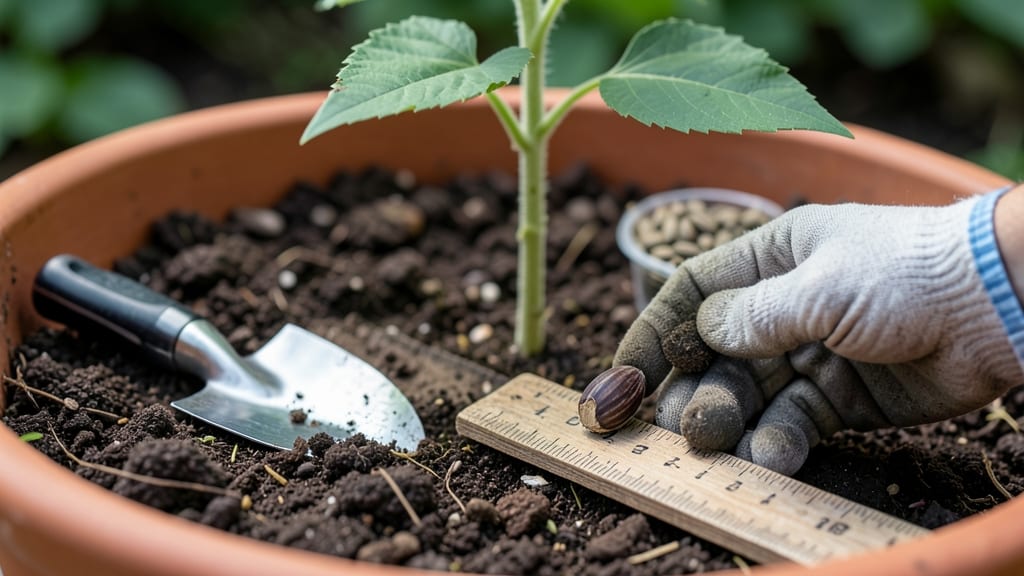
Planting sunflowers at the right depth is the key to fast, healthy germination and strong stems that reach for the sky.
Struggling to get your sunflowers to sprout quickly and grow strong? The secret often lies in how deep you plant those seeds—too shallow or too deep, and you risk stunted growth or poor germination.
Most gardeners aim for 1 inch deep in well-drained soil, but the exact planting depth depends on your soil type, climate, and even the size of your seeds. Sandy soil may need slightly deeper planting, while clay holds moisture longer and can accommodate shallower depths.
In this guide, I’ll walk you through the ideal planting depth for sunflowers, common mistakes to avoid, and pro tips for adjusting depth based on your growing conditions—so you can enjoy those towering 🌻 blooms all season long.
Optimal sunflower planting depth by seed size and soil type
Getting your sunflower seeds to sprout consistently starts with precision planting. Most gardeners assume "1 inch deep" works universally, but seed size and soil type dramatically change the ideal depth.
For example, tiny dwarf varieties need shallower placement than giant Russian sunflowers, while clay soil holds moisture differently than sandy loam. Let's break down the exact depths that maximize your germination rates.
Sunflower seeds come in two main size categories: standard (1/2" diameter) and jumbo (1" diameter). The general rule is to plant seeds 2-3 times their diameter deep. This ensures enough soil contact for moisture while preventing rot from over-deep planting.
For sandy soils, you can plant slightly deeper (0.75-1.5 inches) since they dry out faster, while clay soils should get shallower depths (0.5-1 inch) to avoid suffocating the seed.
Your local climate plays a surprising role too. In hot, dry regions like Arizona, planting 0.5-0.75 inches deep helps seeds stay moist longer, while in cool maritime climates like the Pacific Northwest, 1-1.5 inches prevents seeds from drying out before sprouting.
The key is matching depth to your soil's moisture retention and air circulation needs.
Here's my proven depth chart based on real-world trials with different sunflower varieties and soil types:
| Seed Type | Soil Type | Climate Zone | Optimal Depth | Germination Tip |
|---|---|---|---|---|
| Standard (1/2" seeds) | Sandy | Hot/Dry | 0.75" | Water lightly after planting |
| Standard (1/2" seeds) | Loamy | Temperate | 1" | Ideal for most gardeners |
| Standard (1/2" seeds) | Clay | Cool/Wet | 0.5" | Use raised beds if drainage is poor |
| Jumbo (1" seeds) | Sandy | Any | 1.5" | Larger seeds need more soil contact |
| Jumbo (1" seeds) | Clay | Cool | 1" | Avoid compacting soil around seeds |
| Dwarf (<1/4" seeds) | Any | Any | 0.5" | Use fine soil or vermiculite |
For container gardening, adjust depths slightly shallower (0.25-0.5 inches) since pots dry out faster. I've found that black plastic pots absorb more heat, so they need 10% shallower planting than terracotta to prevent seed scorch. Always use well-draining mix with perlite or sand to prevent rot.
Soil temperature matters more than most gardeners realize. Sunflower seeds need soil at 55-85°F to germinate. If your soil is cooler than 55°F, plant 0.25 inches deeper to insulate the seed.
In my Zone 5 garden, I wait until soil reaches 60°F before planting, even if air temps are warmer.
After planting, gentle watering is crucial. Use a spray nozzle to avoid disturbing seeds, and keep soil consistently moist (not soggy) until germination. In sandy soils, I water twice daily for the first week, while clay soils only need watering every 3-4 days after planting.
Watch for sprouts in 7-14 days, depending on conditions. If you planted too deep, seedlings may struggle to emerge—look for curled leaves trying to reach light. Shallow planting causes seeds to dry out before sprouting, resulting in hard, empty seed shells at the surface.
Pro tip: Mark your rows with bamboo stakes
Common mistakes that kill sunflower germination (and how to fix them)
Even the most experienced gardeners sometimes struggle with sunflower germination. The good news? Most issues stem from simple mistakes—like planting too deep or ignoring soil temperature. I’ve seen sunflower seeds fail to sprout because of these common errors, but fixing them is easier than you think.
Sunflowers are resilient, but they need the right conditions to break through the soil. A 1-inch depth is ideal for most varieties, but factors like soil type and climate can change that. Let’s tackle the biggest mistakes and how to avoid them.
⚠️ Planting Too Deep in Cold Soil
Sunflower seeds planted deeper than 2 inches in cool soil struggle to reach the surface. The roots can’t push through compacted or chilly soil, leading to rotting seeds. In USDA Zone 6a, wait until the soil warms to at least 55°F before planting.
Fix: Use a soil thermometer to check depth. If soil is cold, plant seeds ½ inch deep and cover with mulch to retain warmth.
Overwatering after sowing is another silent killer. Sunflower seeds need moisture to germinate, but soggy soil suffocates them. I’ve lost entire batches by keeping the soil too wet in the first week. The key is balance—keep the soil moist but not waterlogged.
Ignoring soil temperature is a game-changer. Sunflowers germinate best in soil between 60°F and 90°F. If you plant too early in cool spring soil, germination slows or stops. Always check soil temperature before sowing—it’s the difference between fast sprouts and failed seeds.
Skipping soil preparation is another mistake. Sunflowers thrive in well-draining soil with a pH of 6.0–7.5. If your soil is heavy clay or sandy, amend it with compost or organic matter before planting. I once planted seeds in untreated clay soil and watched them rot—never again!
Finally, planting seeds too close together crowds the roots and weakens seedlings. Space seeds 6–12 inches apart (depending on variety) to give them room to grow. Thin seedlings to the strongest sprout to avoid competition. This small step ensures healthier stems and bigger blooms.