
Vegetables
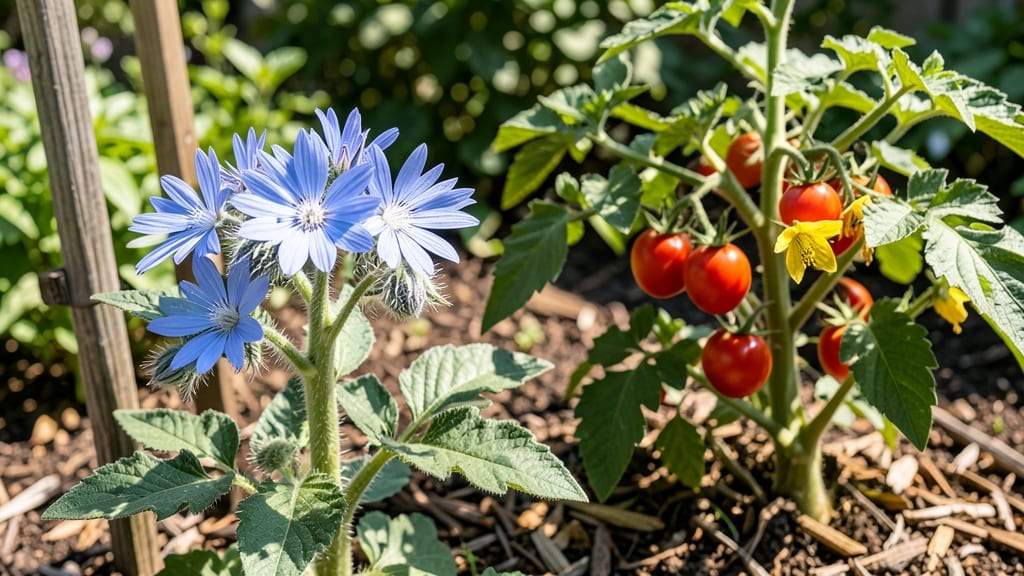
Growing borage with tomatoes is the cold-climate gardener's secret weapon for bigger harvests and fewer pests. 🌱 I planted them together last spring, and my tomatoes thrived while the borage bloomed like clockwork—even when temperatures dipped below 50°F at night.
The combination works because borage attracts pollinators, deters tomato hornworms, and even improves flavor by repelling aphids that love young tomato leaves.
You'll need just a few things: a sunny spot (6+ hours of light), well-draining soil, and patience—borage self-seeds aggressively. Space tomato plants 18-24 inches apart and scatter borage seeds lightly around them.
The borage grows fast, reaching 2-3 feet tall, so it won't compete for space but will spread its protective canopy over your tomatoes. Mulch lightly to keep moisture consistent, especially in cool weather.
By midsummer, you'll notice the difference: tomatoes with fewer holes, more flowers, and sweeter fruit. The borage's star-shaped blue flowers also make your garden look like a cottage garden exploded with color.
Plus, you can snip the leaves for salads—they taste like cucumber with a hint of mint. It's a win-win for both plants and your harvest.
This pairing works in containers too—just use larger pots (12+ inches deep) and plant 1-2 borage seeds per tomato. If you're in a short-season area, start borage indoors 4-6 weeks before your last frost.
The key is letting them grow together naturally; no fancy tricks needed. Your tomatoes will thank you at harvest time.
📚 In This Guide
- What you need
- Instructions
- Tips and common mistakes
- Wrapping up and next steps
What you need
- ● Seeds: 1 packet borage seeds (organic, untreated, ~100 seeds)
- ● 2–3 packets tomato seeds (choose cold-hardy varieties like 'Stupice' or 'Mountain Merit'; ~50 seeds per packet)
- ● Soil: 1–2 cubic yards of well-draining, nutrient-rich soil (pH 6.0–7.0)
- ● 1 bag compost (for enriching soil; ~4–6 cubic feet)
- ○ Optional: 1 lb. balanced fertilizer (5-10-10 ratio) or organic alternatives like worm castings
- ● Containers or Garden Space: For borage: 1–2 large pots (12+ inches deep) or direct sow in a sunny, sheltered spot
- ● For tomatoes: 2–3 containers (5-gallon buckets or larger) or raised beds (12+ inches deep)
- ● Hand trowel or transplanting tool
- ● Watering can or hose with gentle spray nozzle
- ○ Garden gloves (optional but recommended!)
- ● Row cover or frost cloth (for early planting in cold climates)
- ● Stakes or tomato cages (3–5 per tomato plant)
- ● Mulch (straw or shredded leaves; ~2–3 inches)
- ● Full sun exposure (6+ hours daily) or partial shade in hot climates
- ● Protection from strong winds (borage and tomatoes are sensitive!)
- ● Patience! Borage germinates quickly (7–14 days), while tomatoes may take 7–21 days.
Step-by-step instructions for planting borage with tomatoes
Here's how I pair these two plants for maximum flavor and pest control in cooler climates.
🌱 Step 1: Choose Companion Plant Locations
Plant borage 12-18 inches away from your tomato plants, not directly touching. I like to place borage at the edges of the tomato bed or in a separate small pot nearby. This gives the tomato roots room to expand while still benefiting from borage's pest-repelling properties. Borage's tall stems also provide shade for tomato seedlings when they're young.
If you're working with containers, dedicate one 5-gallon pot to borage and place it beside your tomato pots. The key is keeping them close enough for the borage to deter pests like hornworms and aphids, but far enough that they don't compete for nutrients.
☀️ Step 2: Plant at Optimal Times for Cold Climates
Start borage seeds indoors 6-8 weeks before your last frost date—they germinate quickly and handle cool soil better than tomatoes. Transplant borage outdoors as soon as the soil reaches 45°F, while waiting 2 weeks later to plant tomatoes after the last frost. Borage thrives in cooler temperatures and acts as a living mulch to protect tomato roots from late-season chills.
I always plant borage first because it grows fast. By the time tomato seedlings are ready to go in the ground, the borage is already 6-8 inches tall and ready to start working its pest-deterrent magic. This staggered planting prevents competition for sunlight during the critical early growth stages.
💧 Step 3: Water and Maintain Together
Water both plants 1-2 inches deep per week, aiming for the base rather than overhead. Borage's deep taproot means it's drought-tolerant once established, but tomatoes need consistent moisture. I water in the morning so the foliage dries quickly, reducing disease risk for both plants. You'll notice the borage's bright blue flowers attract beneficial insects like bees and predatory wasps that also help control tomato pests.
Mulch around both plants with 2-3 inches of straw or grass clippings to retain moisture and regulate soil temperature. The mulch also helps prevent soil-borne diseases from splashing onto tomato leaves. Watch for borage's self-seeding habit—it'll pop up everywhere next year, so I either let it volunteer or collect seeds for next season.
✂️ Step 4: Prune and Harvest Strategically
Leave borage unpruned until after the first tomato harvest. At that point, you can trim back one-third of the plant's height to encourage bushier growth and more flowers. The more flowers you have, the more beneficial insects you'll attract. I also snip off any borage flowers that have faded—they'll reseed aggressively if left on the plant.
Harvest borage leaves and flowers as needed, but never take more than 20% of the plant at once. The leaves have a cucumber-like flavor that works well in salads or as a garnish. The flowers make a beautiful (and edible) addition to tomato-based dishes. This selective harvesting keeps the plant vigorous enough to continue protecting your tomatoes.
🪴 Step 5: Plan for Seasonal Transition
As summer progresses, watch for borage's tendency to bolt and go to seed. While this means fewer flowers, it also means the plant will produce seeds for next year. Let it complete its cycle—those seeds are free plants for your next tomato patch. When tomato production winds down in fall, you can either let the borage die back naturally or cut it down and compost it.
I always leave a few borage plants standing through winter in milder climates. Their woody stems provide winter interest and often resprout in spring. This gives you an early head start on next year's pest control. The roots left in the soil also improve the following year's tomato growth through natural nitrogen fixation.
Tips & tricks for perfect borage-tomato pairings
This dynamic duo thrives together—here's how to maximize their benefits without the common pitfalls.
Spacing Strategy: The 12-18 inch spacing between plants isn't arbitrary—it creates the perfect balance. Borage's stems naturally arch outward, providing shade for young tomato seedlings while leaving enough room for tomato roots to establish. I've found that placing borage at the edges of your tomato bed creates a natural windbreak too, protecting tender tomato stems from late-season winds that can snap them.
Soil Temperature Tip: That 45°F soil temperature threshold for transplanting borage is crucial—it's when the soil warms enough for seeds to germinate reliably but stays cool enough that tomatoes won't bolt. Use a soil thermometer if you're unsure; I've seen borage seeds fail to sprout when planted in colder soil, even if the air temperature seems right. The key is consistent warmth at that depth.
Watering Wisdom: The 1-2 inch weekly watering guideline works best when applied directly to the soil base rather than overhead. I've noticed that morning watering—especially when done early—reduces fungal risks dramatically. For container gardens, I add a moisture meter to the borage pot since containers dry out faster than in-ground plantings, and borage's deep roots need consistent moisture to establish properly.
Pruning Precision: When you trim back one-third of the borage's height after the first tomato harvest, focus on removing the tallest stems first. This encourages bushier growth at the base where you want those pest-repelling flowers to proliferate. I also recommend using clean, sharp pruners to avoid tearing the stems—which can invite disease. The flowers you remove make excellent edible garnishes for tomato dishes!
Pro Tips for Borage And Tomatoes
- This dynamic duo thrives together—here's how to maximize their benefits without the common pitfalls.
- Spacing Strategy: The 12-18 inch spacing between plants isn't arbitrary—it creates the perfect balance.
- Soil Temperature Tip: That 45°F soil temperature threshold for transplanting borage is crucial—it's when the soil warms enough for seeds to germinate reliably but stays cool enough that tomatoes won't bolt.
Frequently asked questions
Got questions about growing borage and tomatoes together? You’re not alone! Here are some of the most common queries—plus straightforward answers to help you grow a thriving, flavor-packed garden.
Can borage really improve tomato flavor?
Yes! Borage’s star-shaped flowers attract pollinators, boosting tomato fruit set and sweetness. Its mild cucumber-like taste also enhances tomato dishes when used fresh (flowers) or as a pesto (leaves). Some gardeners swear by the combo for juicier, more aromatic tomatoes—especially in cooler climates.
When should I plant borage with tomatoes?
Plant borage 2–4 weeks before your last frost (it’s cold-hardy) and tomatoes after soil warms to 50°F+. For a staggered harvest, sow borage seeds every 3–4 weeks until midsummer. Borage grows fast (60–90 days to flower), so it’ll be ready to support tomatoes early in the season.
Will borage compete with tomatoes for nutrients?
Not if spaced properly! Give each tomato plant 18–24 inches of space and place borage 1–2 feet away (it spreads aggressively). Borage’s deep roots improve soil, while its shallow roots don’t steal much from tomatoes. If overcrowding occurs, prune borage’s side shoots to redirect energy upward.
What if I don’t have borage—are there alternatives?
Try these pollinator-friendly companions:
- Nasturtiums: Pest-repellent + edible flowers
- Calendula: Attracts bees + mild flavor
- Marigolds: Deter pests (but avoid French marigolds—they can stunt tomatoes)
- Basil: Improves flavor + deters flies (plant near stems, not roots)
Why are my tomato leaves yellowing near the borage?
Yellowing leaves often signal overwatering or root competition. Check soil moisture—tomatoes hate soggy roots. If borage is sprawling, trim its runners or relocate it. Another culprit? Verticillium wilt (a soil fungus). Rotate crops next year and avoid planting borage/tomatoes in the same spot annually.
Wrapping up and next steps
Growing borage and tomatoes together isn’t just a clever gardening trick—it’s a flavor-packed, pest-resistant powerhouse for your cold-climate garden! 🌱 The two plants thrive as companions, boosting each other’s growth while offering bold, vibrant flavors in your kitchen.
Whether you’re a seasoned gardener or just starting out, this dynamic duo proves that even cooler climates can yield abundant, delicious harvests.
Ready to take the next step? Start small—plant a few borage flowers near your tomato beds this season and watch the magic unfold. Experiment with recipes, share your harvest with friends, or even expand your garden next year. Your taste buds (and garden!) will thank you. 🍅✨