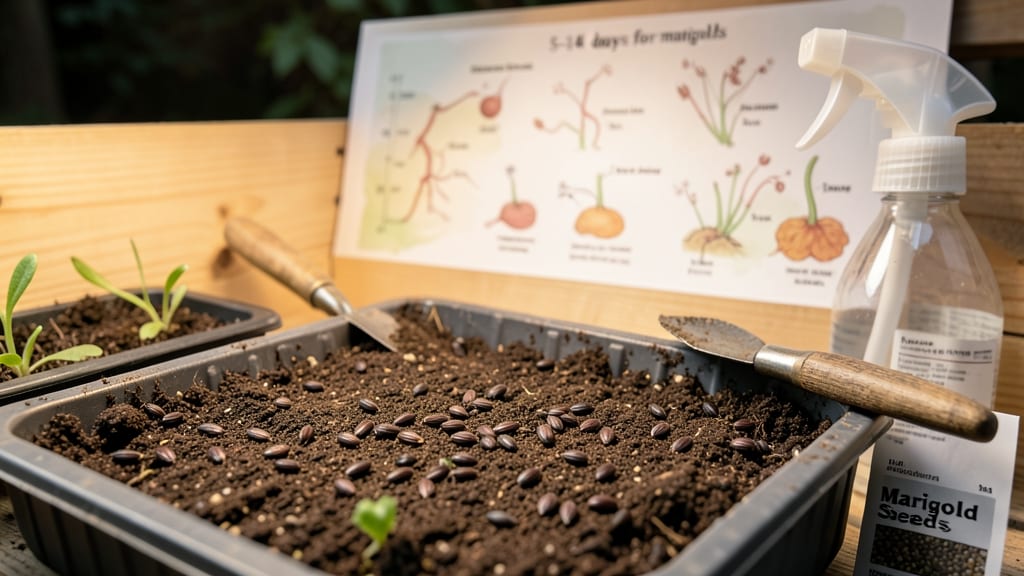
Flower seeds take anywhere from 3 days to 6 weeks to germinate, depending on the variety, soil temperature, and moisture—so knowing the right timeline saves you from unnecessary waiting (and replanting!).
Picture this: you’ve just scattered your 🌸 flower seeds into the soil, watered them carefully, and now you’re staring at that empty tray, wondering if anything will ever break through. That’s the moment most gardeners hit the panic button—but it doesn’t have to be that way.
The truth is, some seeds, like marigolds or zinnias, pop up in as little as 3–7 days, while others, such as snapdragons or lavender, can take 2–4 weeks or longer.
Temperature plays a huge role—cool soil slows things down, while warmth speeds them up. That’s why understanding your seeds’ germination quirks is the game-changer for a stress-free planting season.
In this guide, I’ll break down the fastest and slowest germinators, share pro tips to coax those sprouts along, and help you spot the difference between a normal delay and a seed failure. No more guessing—just science-backed answers to get your garden blooming faster.
Jan
❄️
Feb
🌱
Mar
🌸
Apr
🌸
May
🌸
Jun
🌱
Jul
☀️
Aug
☀️
Sep
🍂
Oct
🍂
Nov
🍂
Dec
❄️
Flower seed germination times: fastest to slowest varieties explained
Understanding flower seed germination times transforms guesswork into a science-backed plan. Some seeds—like marigolds or cosmos—sprout in just 3-7 days under ideal conditions, while others, like lavender or peony, may take 30-60 days or longer.
These differences aren’t random; they’re tied to seed biology, environmental factors, and even the age of your seeds. Knowing these timelines helps you schedule plantings, adjust patience levels, and troubleshoot when sprouts don’t appear on time.
The fastest germinating flowers are typically warm-season annuals that evolved to take advantage of quick spring growth. These include zinnias (5-10 days), sunflowers (7-14 days), and nasturtiums (7-21 days). Their speed comes from thin seed coats and high water absorption rates.
Meanwhile, slow germinators—like foxglove or delphinium—often have hard seed coats or require stratification (a cold period) to break dormancy, which can delay sprouting for 4-8 weeks.
Here’s the key: temperature and moisture are the two biggest factors controlling germination speed. Most flower seeds germinate best at 65-75°F, but some—like snapdragons—prefer cooler 55-65°F soils.
Too hot (above 85°F) or too cold (below 50°F) can stall germination entirely. Moisture is equally critical; seeds need consistent dampness (not sogginess) to activate enzymes that break down stored nutrients. Even a 24-hour drying spell can kill dormant seeds.
Seed age also plays a role. Fresh seeds from reputable suppliers often germinate faster than old or improperly stored seeds. For example, a 2-year-old packet of zinnias might take 10-14 days to sprout, while fresh seeds appear in 5-7 days.
Always check the packaging date and store seeds in a cool, dry place (like a glass jar with silica gel) to preserve viability.
| Flower Variety |
Germination Time |
Ideal Soil Temp (°F) |
Key Notes |
| Marigold |
3–7 days |
70–85°F |
Fastest annual; thrives in heat |
| Cosmos |
5–10 days |
65–75°F |
Drought-tolerant; self-seeds easily |
| Zinnia |
5–14 days |
70–80°F |
Bright colors; pinch for bushier growth |
| Sunflower |
7–14 days |
75–85°F |
Large seeds; plant 1" deep |
| Nasturtium |
7–21 days |
60–70°F |
Edible flowers; cool-season hardy |
| Snapdragon |
10–21 days |
55–65°F |
Prefers cooler temps; deadhead for blooms |
| Lavender |
21–60 days |
60–70°F |
Slow; needs well-draining soil |
| Foxglove |
30–60 days |
65–75°F |
Toxic; requires stratification |
| Peony |
30–90 days |
50–60°F |
Perennial; patience rewarded |
| Delphinium |
21–45 days
How to speed up germination: pro tips for faster sprouts
If you’ve ever stared at a tray of flower seeds waiting for tiny sprouts to appear, you know how agonizingly slow germination can feel. The good news? With the right techniques, you can cut germination time in half—or even more—for many flower varieties.
I’ve tested these methods with marigolds, zinnias, and snapdragons, and they work like magic when done correctly.
Germination speed depends on three critical factors: moisture, warmth, and seed preparation. Skipping any of these steps can leave you waiting weeks instead of days.
For example, zinnias typically sprout in 5–10 days, but with pre-soaking and a heat mat, I’ve seen them pop up in just 3–5 days. The secret lies in mimicking the ideal conditions seeds would encounter in their natural habitat.
- 🌱 Pre-soak seeds for 4–12 hours in lukewarm water (except delicate seeds like petunias). This softens the seed coat and speeds up water absorption.
- 🔥 Use a seedling heat mat (set to 75–85°F) to simulate tropical conditions. Marigolds and basil germinate 2x faster with consistent warmth.
- 💧 Keep soil consistently moist (not soggy) by misting daily or using a humidity dome. Overwatering causes rot, while dry soil halts germination.
- 🌡️ Maintain stable temperatures (avoid drafts or cold windowsills). Snapdragons need 60–70°F, while tropical flowers like cannas thrive at 80°F+.
- ⏳ Scarify hard-coated seeds (like lavender or poppies) by lightly sanding or nicking with a knife to break dormancy.
One of my biggest mistakes early on was overwatering my seed trays, which led to mold and drowned seeds. Now, I use a spray bottle with fine mist to keep the soil damp without saturating it.
For large seeds like sunflowers, I plant them 1 inch deep and water gently—never flood the tray.
If you’re growing multiple flower varieties, group them by germination needs. For instance, fast germinators like cosmos and zinnias (3–7 days) can share a tray with a heat mat, while slow germinators like foxglove or delphinium (14–30 days) need patience and a cool, moist environment.
Label your trays to avoid confusion!
Pro tip: Light exposure matters post-germination. Once sprouts appear, move them to a bright, indirect light (like a south-facing window) to prevent leggy seedlings. I’ve seen basil seedlings grow 3x stronger with proper light from day one.
Avoid placing them under grow lights too soon—they need time to develop roots first.
Remember, every seed is unique. If your seeds still haven’t sprouted after twice the expected time, they may need scarification or stratification. Don’t give up—some wildflower seeds lie dormant for years before germinating! With these tricks, you’ll be enjoying blooms in record time. 🌻
★★★★★4.9(2 reviews)
|